We could not find any results for:
Make sure your spelling is correct or try broadening your search.
UK equities were little changed in early trading on Friday, while sterling edged lower against the US dollar after fresh data showed an unexpected decline in retail sales during November.
By 09:04 GMT, the FTSE 100 was marginally down 0.02%, while the pound slipped 0.06% against the dollar, trading just above the 1.33 level. Elsewhere in Europe, Germany’s DAX fell 0.04% and France’s CAC 40 eased 0.05%.
UK retail sales declined by 0.1% month-on-month in November, according to figures published by the Office for National Statistics. The data followed a revised 0.9% fall in October, previously reported as a 1.1% drop. Economists had been expecting a modest rebound of 0.3%, making the latest reading a negative surprise.
In corporate news, shares in Metro Bank PLC (LSE:MTRO) and OSB Group PLC (LSE:OSB) rose sharply, gaining around 2% and 3% respectively. The rally followed confirmation that both lenders have received regulatory approval to exit the Minimum Requirement for Own Funds and Eligible Liabilities (MREL) regime, which has weighed on profits through elevated interest costs. The Prudential Regulation Authority said the banks will be reclassified as transfer firms with effect from 1 January 2026.
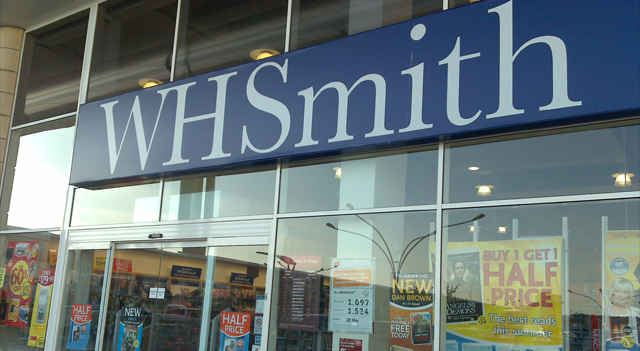
By contrast, WH Smith PLC (LSE:SMWH) came under pressure after reporting weaker full-year earnings and issuing a sharply reduced profit outlook. The travel retailer now expects headline profit of £100–115 million for the year ahead, well below previous guidance of £182.6 million and market expectations of roughly £157 million.
The company posted headline group profit before tax and non-underlying items of £108 million for the year ended 31 August. Headline trading profit fell to £159 million from £170 million a year earlier, while diluted headline earnings per share before non-underlying items dropped 28% to 43.4p. Shares in WH Smith declined in morning trade following the update.
On the currency front, the pound later found some support after the Bank of England released a statement that was seen as less dovish than markets had anticipated. According to ING, several policymakers expressed concern about persistently strong wage growth expectations and structural inflation pressures, lending some resilience to sterling.
ING analysts added that they expect wage growth expectations to begin easing in early 2026 as headline inflation continues to trend lower.
This content is for informational purposes only and does not constitute financial, investment, or other professional advice. It should not be considered a recommendation to buy or sell any securities or financial instruments. All investments involve risk, including the potential loss of principal. Past performance is not indicative of future results. You should conduct your own research and consult with a qualified financial advisor before making any investment decisions.
Some portions of this content may have been generated or assisted by artificial intelligence (AI) tools and been reviewed for accuracy and quality by our editorial team.

It looks like you are not logged in. Click the button below to log in and keep track of your recent history.



Support: +44 (0) 203 8794 460 | support@advfn.com
By accessing the services available at ADVFN you are agreeing to be bound by ADVFN's Terms & Conditions


 Premium






 Customisable watchlists with full streaming quotes from leading exchanges, such as LSE, NASDAQ, NYSE, AMEX, Bovespa, BIT and more.