
We could not find any results for:
Make sure your spelling is correct or try broadening your search.
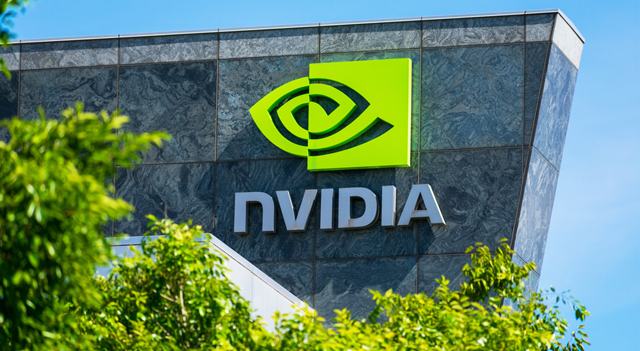
Many were hoping that a strong earnings report from Nvidia would help turn sentiment around. The company’s numbers for Q3 FY2026 indeed didn’t disappoint, yet the S&P 500 index is still on track for its worst November since 2008.
So what’s going on?
First, let’s talk about Nvidia’s results. Revenue hit $57 billion, up 22% from last quarter and 62% from a year ago. But most importantly, the company expects around $65 billion in revenue next quarter.
Furthermore, Nvidia CEO Jensen Huang argued that AI demand is real: companies are moving to GPUs, new AI applications are emerging, and “agentic AI” will need even more computing power.
The takeaway, thus, is that Nvidia stock price growth is driven by structural shifts in AI, not hype.
So why didn’t the indexes soar?
Because uncertainty remains.
In particular, there’s still no clarity on how long Nvidia can sustain this kind of explosive growth. Infrastructure constraints and a heavy reliance on a few major customers raise concerns, especially at a time when consumer sentiment is deteriorating.
On top of that, the broader fear of an AI bubble hasn’t gone away. Investors see companies boosting their CAPEX just to stay competitive, in some cases relying on debt to do so — for example, Oracle. Finally, there is a worry that weakness in just one key player could ripple across the entire sector, and let’s not forget about still-high valuations.
As a result, investors have been trimming their exposure to riskier assets, including Bitcoin, which last week dropped to nearly $80,000.
And then there’s the rapid deterioration of U.S. liquidity. Repo rates are climbing, reverse repo balances are plunging, and funding costs for banks and hedge funds are spiking. If leveraged investors are forced to unwind positions, it could lead to waves of forced selling, creating a domino effect across the market.
Whether this will lead to an already long-forecasted market crash depends, of course, on how circumstances unfold. One of the factors to watch will be macro data in the U.S. and Fed rhetoric, especially regarding liquidity issues.
This article was written by the editorial team at InvestorsHub/ADVFN and is provided for informational purposes only. In some cases, editorial staff may use artificial intelligence–based tools to assist in the research, drafting, or editing of content, under human review and oversight. This article does not constitute investment advice, a recommendation, or an offer to buy or sell any securities. The views expressed are based on publicly available information believed to be reliable at the time of publication, but accuracy or completeness is not guaranteed. Readers should conduct their own independent research and consult a qualified financial professional before making any investment decisions.






It looks like you are not logged in. Click the button below to log in and keep track of your recent history.



Support: +44 (0) 203 8794 460 | support@advfn.com
By accessing the services available at ADVFN you are agreeing to be bound by ADVFN's Terms & Conditions


 Premium





 Customisable watchlists with full streaming quotes from leading exchanges, such as LSE, NASDAQ, NYSE, AMEX, Bovespa, BIT and more.