We could not find any results for:
Make sure your spelling is correct or try broadening your search.
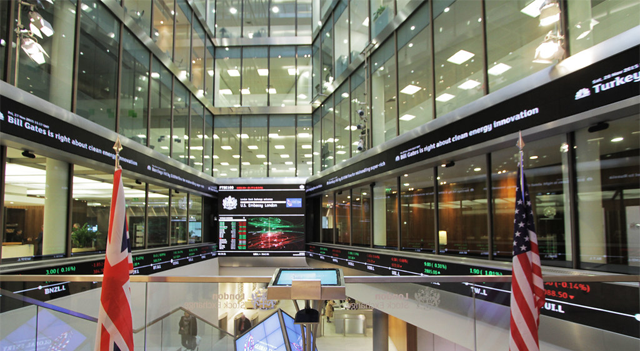
European equity markets fell on Friday as worries grew that tariff-related uncertainties might already be weighing on corporate earnings, despite ongoing talks about a possible trade agreement between the U.S. and the European Union.
By 08:00 GMT, Germany’s DAX index dropped 0.9%, France’s CAC 40 slipped 0.4%, and the U.K.’s FTSE 100 also declined by 0.4%.
On Thursday, a spokesperson from the European Commission indicated that a trade tariff agreement between the EU and the U.S. is “within reach,” ahead of the August 1 deadline when U.S. President Donald Trump has threatened to impose a broad 30% tariff on European imports.
Reuters, citing two diplomats, reported that this deal would likely impose a general 15% tariff on EU goods entering the United States.
Although the announcement of potential deals — including the recently finalized U.S.-Japan trade agreement earlier this week — has generated some optimism, it’s important to recognize that such arrangements could still negatively affect many of Europe’s biggest companies.
Within the corporate sector, Volkswagen (TG:VOW3) shares dropped after the German automaker lowered its full-year financial outlook, revealing a €1.3 billion impact from tariffs.
Michelin (EU:ML) also suffered losses after the French automotive parts supplier reported a 27.8% plunge in net income during the first half of the year, largely due to tariff threats causing a sharp downturn in North and Central America.
Shares of Puma (TG:PUM) fell following disappointing second-quarter sales and a downward revision of its full-year guidance, as the German sportswear company pointed to the effect of U.S. trade tariffs.
Similarly, Traton (TG:8TRA) saw a steep decline after cutting its annual forecast and warning of a challenging trading environment.
Not all news was negative: Remy Cointreau (EU:RCO) shares rose after the French spirits producer raised its profit forecast for the year and posted better-than-expected first-quarter sales, helped by reduced tariff effects in China.
NatWest Group (LSE:NWG) also saw its stock rise after the British bank reported an 18% jump in first-half profits, boosted by higher interest income.
Economically, consumer confidence in the U.K. declined in July amid sluggish economic growth and persistent inflation, according to data released on Friday.
The consumer confidence index, compiled by research firm GfK in partnership with the Nuremberg Institute for Market Decisions, fell to minus 19 in July from minus 18 in June, reversing the slight improvement seen the previous month.
Germany’s Ifo business climate index also showed a modest drop in sentiment in July, reflecting ongoing struggles in broader European economic growth.
The European Central Bank held interest rates steady on Thursday after cutting rates eight times over the past year, choosing to wait as Brussels and Washington negotiate a trade deal that could reduce ongoing tariff-related uncertainty.
Oil prices advanced on Friday, building on sharp gains from the previous session, driven by hopes for additional U.S. trade agreements before President Donald Trump’s looming deadline.
At 04:00 ET, Brent crude futures rose 0.5% to $69.54 per barrel, while U.S. West Texas Intermediate crude futures gained 0.5% to $66.37 per barrel.
Both contracts surged more than 1% on Thursday after data showed a notable drop in U.S. crude stockpiles.
Oil markets have been supported by expectations of new trade deals between the U.S. and its partners ahead of the August 1 deadline for fresh tariffs on goods from several countries.
Lower trade tensions help stimulate economic activity and cross-border commerce, which in turn raises oil demand through increased transportation and industrial energy consumption.
This content is for informational purposes only and does not constitute financial, investment, or other professional advice. It should not be considered a recommendation to buy or sell any securities or financial instruments. All investments involve risk, including the potential loss of principal. Past performance is not indicative of future results. You should conduct your own research and consult with a qualified financial advisor before making any investment decisions.
This content is for informational purposes only and does not constitute financial, investment, or other professional advice. It should not be considered a recommendation to buy or sell any securities or financial instruments. All investments involve risk, including the potential loss of principal. Past performance is not indicative of future results. You should conduct your own research and consult with a qualified financial advisor before making any investment decisions.
Some portions of this content may have been generated or assisted by artificial intelligence (AI) tools and been reviewed for accuracy and quality by our editorial team.

It looks like you are not logged in. Click the button below to log in and keep track of your recent history.



Support: +44 (0) 203 8794 460 | support@advfn.com
By accessing the services available at ADVFN you are agreeing to be bound by ADVFN's Terms & Conditions
 Hot Features



 Premium





 Register for Free to get streaming real-time quotes, interactive charts, live options flow, and more.